Reading: Public intimacy; architecture and the visual arts (2007) by Giuliana Bruno.
Film Genealogy and Museographic Space. Museographic is the enumeration and description of a museum’s collection
Geovisual culture – emphasises knowledge construction over knowledge storage or information transmission, allowing for data exploration and a decision-making process.
Veduta – A veduta, Italian for view, is a highly detailed, usually large-scale painting or, more often, print of a cityscape.

Site seeing: Filmic and architectural promenades
Mnemonic – A mnemonic device, or memory device, is any learning technique that aids information retention or retrieval in the human memory. A system such as a pattern of letters, ideas.
The architectural paths of the art of memory
Quintilian – Marcus Fabius Quintilianus, Roman educator and rhetorician from Hispania, widely referred to in medieval schools of rhetoric and in Renaissance writing.
Cinematic Devices
Francis Ronalds at the Kew Observatory in 1845. A photosensitive surface was drawn slowly past the aperture diaphragm of the camera by a clockwork mechanism to enable continuous recording over a 12- or 24-hour period. Ronalds applied his cameras to trace the ongoing variations of scientific instruments and they were used in observatories around the world for over a century.

The chronophotographic gun was invented in 1882 by Étienne-Jules Marey, a french scientist and chronophotograph. It could shoot 12 images per second and it was the first invention to capture moving images on the same chronomatographic plate using a metal shutter.

1876, Wordsworth Donisthorpe proposed a camera to take a series of pictures on glass plates, to be printed on a roll of paper film. In 1889, he would patent a moving picture camera in which the film moved continuously.

In England by Frenchman Louis Le Prince in 1888, built a 16 lens camera in 1887 at his workshop in Leeds. The first 8 lenses would be triggered in rapid succession by an electromagnetic shutter on the sensitive film; the film would then be moved forward allowing the other 8 lenses to operate on the film. After much trial and error, he was finally able to develop a single-lens camera in 1888, which he used to shoot sequences of moving pictures on paper film.
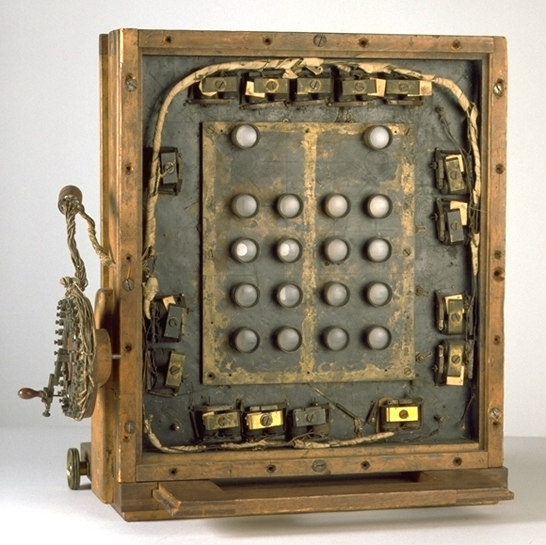
William Friese-Greene in 1890, used rolls of the new Eastman celluloid film, which he had perforated.

William Kennedy Laurie Dickson, a Scottish inventor and employee of Thomas Edison, designed the Kinetograph Camera in 1891. The camera was powered by an electric motor and was capable of shooting with the new sprocketed film. To govern the intermittent movement of the film in the camera.

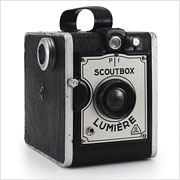
Charles Moisson, the chief mechanic at the Lumière works in Lyon in 1894. The camera used paper film 35 millimeters wide, but in 1895, the Lumière brothers shifted to celluloid film, which they bought from New-York’s Celluloid Manufacturing Co. This they covered with their own Etiquette-bleue emulsion, had it cut into strips and perforated.
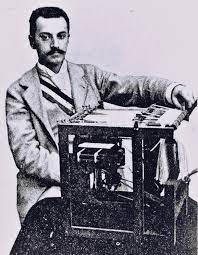
In 1894, the Polish inventor Kazimierz Prószyński constructed a projector and camera in one, an invention he called the Pleograph
A youtube film by ‘Film Thought Project’ retelling the story of the history of film and where we have got to, while reflecting on the importance of the past.
Handmade cinematic devices


Method to refract and reflect light, splitting the light in the site. This would have been a great way to filter and create a fantasy like atmosphere, however the site has very minimal light.


The device breaks up the photographs into segments, drawing the eye away from the centre of the photograph (where the eye naturally is drawn to) Focusing on elements of a space which is easily ignored. The circle like frame is unique although camera lenses are circular, photographic and cinematic framing is usually rectangular or square. The linear splitting is bringing a sharp effect to the soft framing. Playing with the vertical, horizontal and other geometric elements of the space.


Perspective is experimented with in this piece, broken up the previous photographs to piece together. Rotation occurred which creates an unusual view of the space – shadows and textures of materials, shapes which buildings create in the sky-line, beautiful highlights created from the sun hitting reflective surfaces. Spontaneous patterns.

As the space has a vertical significance, I decide to manipulate the framing into becoming quite long and up standing. Rotating images to reach upward. Full site panaroma verticals, a crevice appearance.
Atmospheric lighting photography of site


Beautiful photographs taken within the site. The movement of light, form and stillness. The bold colours of the site are vibrant as they draw attention to it. Shadows hide mysteries, creating contrast and create a lovely shape.
 Zaraspaces