Threshold moment, conceptual model based on time and perspective. Materials made from twine, circulating into a tightly sculpted spiral. The singular rough twines bind together to become one, a subtle interior formed by the weaving. Winsome light peeks through the intertwined material. A soft wave of light projected onto the surface among the darkness. The long loose twine can represent memories coming together to form a reminiscence symbolised by the twirl, pieced together. The opening represents framed perspectives, only being revealed a certain part of reality. The opening can also be used to track time as shadows and light change over head, leaving behind intensional shadows, the absence of light. The handmade layering creates a gentle spontaneous pattern, allowing for the soft and natural curves to be highlighted by the light which is slipping through.


Every individual, despite being emerged in the same scientific definition of ‘time’ experience it independently. Time is the indefinite continued progress of existence and events in the past, present, and future regarded as a whole. Time is manmade yet simultaneously Gods creation. Man created the Year, Month, Day, Hour and Second yet God created Sunrise and Sunset. Despite the rules regarding time, as humans we still have it out of our control, every four years a leap year occurs, readjusting the mistakes of man, as the earth revolves around the sun. The concept of circulation is ironic as we are manipulated to believe the life renews every year, a circulation. Whereas time has no begin or end, a linear, goes on and on forever – less forgiving. No chance to restart, an ongoing.
Time continues, commitment can change the time of wakeness. While one can stay awake for 12 hours every day, compared to someone who stays awake for 16 hours, one can say they have seemingly lived less, while living the same period of time. Life doesn’t come to a stop as the sun drops below the horizon. Does sleep, a moment of temporary unconsciousness, considered living?
https://www.scientificamerican.com/article/what-happens-in-the-brain-during-sleep1/
If surrounded by a stressful or tedious situations, time slows, seemingly, your conscious becomes ultra aware and every second become vital as the body needs every second to prepare a flight or fight response.
https://kids.frontiersin.org/articles/10.3389/frym.2017.00032 – Time slows or stops during a life threatening event.
The time of day or even weather can change the perspective of someone about a space, moody days make areas look much more grim, boring and less beautiful as the light quality and duration that people would want to spend in the space shortens. The time of day can cause stress and anxiety through rush hour, work hours with stress or late at night when dark – the space can therefore cause tension and seem rather uninviting. When the sun is out and during a weekend, or during an event with music, the space can seem vivacious and joyous, spending time relaxing as the space is gravitating.
Film Techniques and jargon
Frame
Bird’s eye view. A shot in which the camera photographs a scene from directly overhead.

Close-up, Close shot. A detailed view of a person or object, usually without much context provided.
Extreme close-up. A minutely detailed view of an object or a person. An extreme close-up of an actor generally includes only his eyes, or his mouth.
Extreme long shot. A panoramic view of an exterior location, photographed from a great distance, often as far as a quarter-mile away.
Eye-level shot. The placement of the camera approximately 5 to 6 feet from the ground corresponding to the height of an observer on the scene.
Full shot. A type of long shot which includes the human body in full, with the head near the top of the frame and the feet near the bottom.
High angle shot. A shot in which the subject is photographed from above.
Long shot. Includes an amount of picture within the frame which roughly corresponds to the audience’s view of the area within the proscenium arch of the legitimate theatre.
![Ultimate Guide to Types of Camera Shots and Angles in Film [50+ Types]](https://s.studiobinder.com/wp-content/uploads/2019/09/Camera-Shot-Guide-Extreme-Wide-Shot-Mad-Mad-Fury-Road-StudioBinder.jpg)
Loose framing. Usually in longer shots. The mise-en-scène is so spaciously distributed that the subject photographed has considerable latitude of movement.
Low angle shot. A shot in which the subject is photographed from below.
Master shot. A single uninterrupted shot, usually taken from a long or full shot range, which contains an entire scene. Later, the closer shots are photographed, and an edited sequence, composed of a variety of different shots, is subsequently constructed on the editor’s bench.
Medium shot. A relatively close shot, revealing a moderate amount of detail. A medium shot of a figure generally includes the body from the knees or waist up.
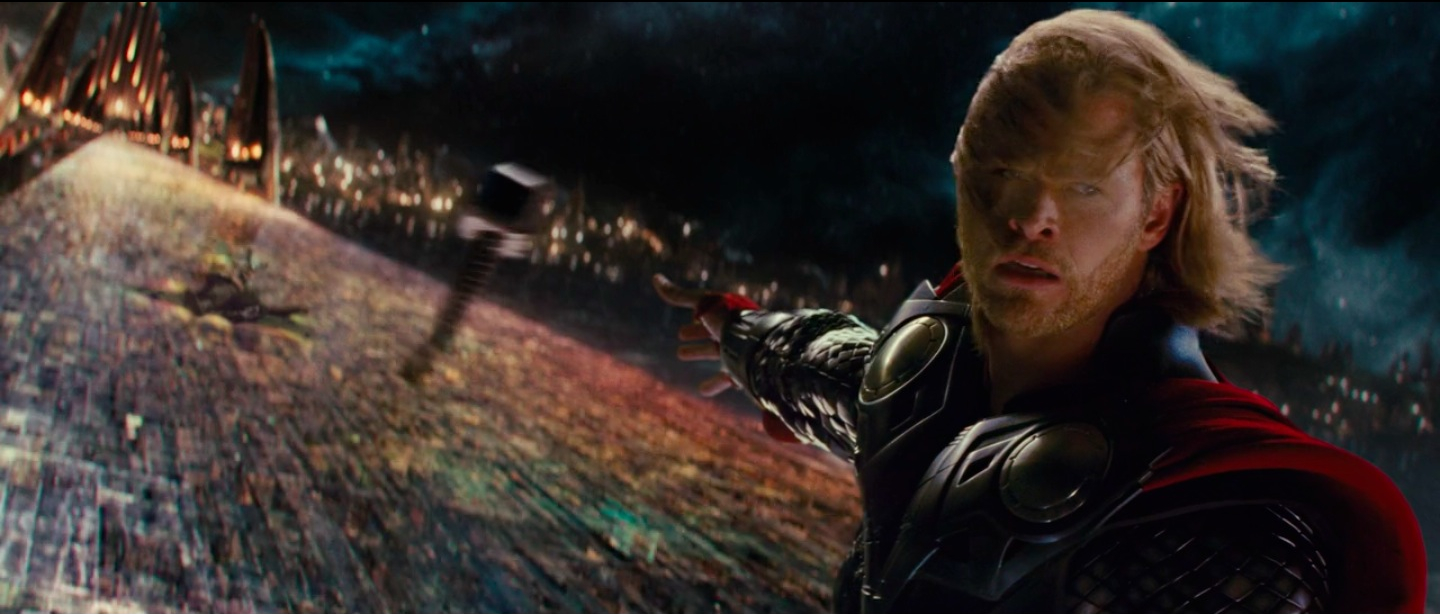
Oblique angle. A shot which is photographed by a tilted camera. When the image is projected on the screen, the subject itself seems to be tilted on its side.
Open forms. Used primarily by realist film directors, these techniques are likely to be subtle and unobtrusive, with an emphasis on informal compositions and apparently haphazard designs. The frame generally is exploited to suggest a temporary masking which arbitrarily cuts off part of the action.
Over-the-shoulder shot. A medium shot, useful in dialogue scenes, in which one actor is photographed head-on from over the shoulder of another actor.
Point-of-view shot. Any shot which is taken from the vantage point of a character in the film. Also known as the first person camera.
Reaction shot. A cut to a shot of a character’s reaction to the contents of the preceding shot.
Reverse angle shot. A shot taken from an angle 180° opposed to the previous shot — that is, the camera is placed opposite its previous position.
Tight framing. Usually in close shots. The mise-en-scène is so carefully balanced and harmonised that the subject photographed has little or no freedom of movement.

Zoom shot. A shot taken with the aid of a zoom lens. The lens changes focal length during the shot so that a dolly or crane shot is suggested.
Movement
Crane shot. A shot taken from a special device called a crane, which resembles a huge mechanical arm. The crane carries the camera and cameraman, and can move in virtually any direction.
Dolly shot, tracking shot, trucking shot. A shot taken from a moving vehicle. Originally tracks were laid on the set to permit a smoother movement of the camera. Today even a smooth hand-held traveling shot is considered a variation of the dolly shot.
Pull-back dolly. A technique used to surprise the viewer by withdrawing from a scene to reveal an object or character that was previously out of the frame.
Wipe. And editing device, usually a line which travels across the screen, “pushing off” one image and revealing another.
Transition
Continuity. The kind of logic implied in the association of ideas between edited shots. “Cutting to continuity” emphasizes smooth transitions between shots, in which space and time are unobtrusively condensed. “Classical cutting” emphasises dramatic or emotional logic between shots rather than one based strictly on considerations of time and space. In “thematic montage” the continuity is based entirely on ideas, irrespective of literal time and space. In some instances, “continuity” refers to the space-time continuum of reality before it is photographed.
Dissolve, lap dissolve. These terms refer to the slow fading out of one shot and the gradual fading in of its successor, with a superimposition of images, usually at the midpoint.
Flash-editing, flash-cutting. Editing sequences so that the durations of the shots are very brief.
Long take. A shot of lengthy duration.
Montage. Transitional sequences of rapidly edited images, used to suggest the lapse of time or the passing of events. Often employs dissolves and multiple exposures. In Europe “montage” means editing.
Other techniques
Deep focus. A technique of photography which permits all distance planes to remain clearly in focus, from close-up range to infinity.
Editing. The joining of one shot (strip of film) with another. The shots can picture events and objects in different places at different times. Editing is also called montage.
Establishing shot. Usually an extreme long or long shot offered at the beginning of a scene or sequence providing the viewer with the context of the subsequent closer shots.
Fish-eye lens. An extreme wide angle lens, which distorts the image so radically that the edges seem wrapped into a sphere.
Mise-en-scène. The arrangement of volumes and movements within a given space. In the cinema, the space is defined by the frame; in the legitimate theater, usually by the proscenium arch.
Rack focusing, selective focusing. The blurring of focal planes in sequence, forcing the viewer’s eye to “travel” with those areas of an image that remain in sharp focus.
Scene. A unit of film composed of a number of interrelated shots, unified usually by a central concern — a location, an incident, or a minor dramatic climax.
Set-up. The positioning of the camera and lights for a specific shot.
Shot. Those images which are recorded continuously from the time the camera starts to the time it stops. That is, an unedited, uncut strip of film.
Sub-text. A term used in drama and film to signify the dramatic implications beneath the language of a play or movie. Often the sub-text concerns ideas and emotions that are totally independent of the language of a text.
Telephoto lens, long lens. A lens which acts as a telescope, magnifying the size of objects at a great distance. A significant side effect is tendency to flatten perspective.
Three-shot. A medium shot, featuring three actors.
Two-shot. A medium shot, featuring two actors.
Wide angle lens, short lens. A lens which permits the camera to photograph a wider area than a normal lens. A significant side effect is its tendency to exaggerate perspective. Also used for deep-focus photography.
Zoom lens. A lens of variable focal length which permits the cameraman to change from wide angle to telephoto shots (and vice versa) in one continuous movement.
Other film terms: https://www.studiobinder.com/blog/movie-film-terms/ https://onlinelibrary.wiley.com/doi/pdf/10.1002/9781444304794.gloss
The Shining (1980)
Directed by Stanley Kubrick
Cinematography by John Alcott
One of the most prominent examples of cinematic horror, “The Shining” is further proof of Stanley Kubrick’s versatility and genius. The actors’ performances certainly stand out, but it is the director’s peculiar striving for inhuman perfection that takes over once more.
The opening aerial shots are essential for delivering the large scale of the movie, but the most memorable scenes are those elaborating Kubrick’s typical symmetrical tracking shots with a single horizon point, which were shot using the new Steadicam stabilizer mount. The sounds heard during Jack’s son’s ride through the different halls of the hotel create a masterfully creepy scene for the ages.
Script
A brief script that moves someone through the site in a way that relates to your conceptual frameworks.
Creating this design script was a challenge, in my concept I want people to explore and find my design on their own means. Needing to be curious and have enough humility to push through the pressures of society to stay between the lines and only do as instructed. Writing cues as my script for someone to follow, no exact description on how to apply these cues, whether to think about, reflect on, physically answer or take photos or videos during the walk through. Self exploration, a discovery during the journey is almost more important than the destination.


Response from Belinda Tran, fellow Spatial design third year student from my site script.
I was delegated Maddie Wrights Design script – A simplistic yet effective script based on the concept of Hypnopompic, relating to the state immediately preceding waking up. https://www.sleepfoundation.org/how-sleep-works/hypnopompic-hallucinations

My natural reaction to the script was anxiety, nervousness filled my body as I saw the words”spin around 10x” as I was felt uncomfortable to step outside the norm of how to behave in society. The External pressure to not act as a fool. One humility came to me, I began to test out how this script would open my perspective as a designer. While spinning around, I noticed I was travelling slightly off centre while doing so, the spacial element was taking the control, moving me downwards towards the centre of Fort Lane. As the rotations were taking place, vision blurred, unable to focus on any surroundings, just. When pace slowed, my eyes clutched onto vibrant the linear lighting. Accidentally already following the second instruction without intent. Following the light was more challenging than excepted as the red LED line suspended above avoids the obstacles below which people wouldn’t, e.g rubbish trucks, people, poles. Losing ‘the light’ was, simply achieved by decreasing my eye level. However, when re-reading the script, i noticed the wording, “the light,” usually defined by God or simply the sun. John 8:12 Jesus applies the title to himself while debating with the Jews and states: I am the light of the world. Whoever follows me will never walk in darkness, but will have the light of life
https://www.biblestudytools.com/topical-verses/bible-verses-about-light/
And therefore it would have been challenging to follow and loose it as the script becomes less realistic to follow. Therefore I used my common sense, and prior knowledge that the sight was plastered with LED signs and installations that I simply followed them. Loosing the the LED light was harder than I expected as it covered the site, almost every direction you turned your head. Something of such a seemingly easy script could have been interpreted in so many ways, by different people. Perspective truly does alter results/experiences significantly. Repetition exaggerates the activity, learning with a faster pace, and repeating with slightly less of a conscious, becoming habit rather than being very aware of the physical and emotional effects of the task.
Conceptual Statement
Auckland City Business district, a collage of perspectives and time. simultaneous chaos disguised as routine. We live together, oblivious of how others are experiencing time and space, trapped in our own heads – impossible to experience others. Assumptions become common. Time is fluid, slows, increases rapidly while maintaining a constant. Time is a reliable source, something to rely on always being there, however slips away when we least expect it. Society is a recipe, merging beings on their journeys together. Journey through time, constant anticipation. Ignorance is a limited frame, a forced perspective through our own eyes, As film snatches our freedom of the narrative, manipulating our perspective to aline with the producers.
 Zaraspaces