
Joseph Paxton, Crystal Palace, London, United Kingdom.

Glass house history
Joseph Paxton , Crystal Palace
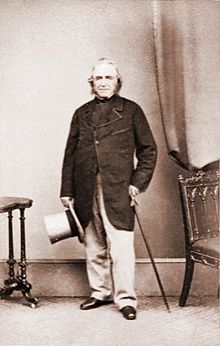

Sir Joseph Paxton was an English gardener, architect, Member of Parliament, and designer. He enrolled at Chiswick Gardens and became the gardener at the age of fifteen for Sir Gregory Osborne Page-Turner at Battlesden Park. In 1823 William Cavendish, 6th Duke of Devonshire met the young gardener as he strolled in his gardens and became impressed with his skill and offered him the position of head gardener at the Horticultural Society’s Chiswick Gardens, the finest landscaped gardens of the time.
In 1832, Paxton developed an interest in greenhouses in designing a series of buildings with “forcing frames” for espalier trees and for the cultivation of exotic plants, he designed a glass house with a ridge and furrow roof that would be at right angles to the morning and evening sun and an ingenious frame design that would admit maximum light. Then in 1849, he built a building for the first seeds of the Victoria Regia lilies which had been sent to Kew from the Amazon. The house had to be rigid enough to provided by the radiating ribs connecting with flexible cross-ribs. Constant experimentation over a number of years led him to devise the glasshouse design that inspired the Crystal Palace.
In 1836, Paxton began construction of the Great Conservatory, or Stove, a huge glasshouse 69m long and 37m wide that was designed by the 6th Duke’s architect Decimus Burton. At the time, the conservatory was the largest glass building in the world. The largest sheet of glass available at that time 0.91m long. It had a central carriageway and when the Queen was driven through, it was lit with twelve thousand lamps. It was prohibitively expensive to maintain and was not heated during the First World War. The plants died and it was demolished in the 1920s.

In 1848 Paxton created the Conservative Wall, a glasshouse 101 m long by 2.1 m wide.

The ‘Great Conservatory’ was the draft for the prefabricated glass and iron structural techniques that Paxton pioneered and would employ for his masterpiece: The Crystal Palace of the Great Exhibition of 1851 in London England. The Great Exhibition of the Works of Industry of All Nations in London was organised by Henry Cole, a British civil servant who visited the Paris Exhibition of 1849, an event dedicated exclusively to the products of French industry. Cole managed to involve some of the country’s most influential people, including Prince Albert. The group met for the first time on January 11, 1850 with the aim of inaugurating the event on May 1, 1951: hence the need for a venue that could be built extremely fast.
Joseph Paxton’s project in collaboration with engineer Charles Fox that prevailed over the more than 200 projects submitted to the Building Committee, which included architects Charles Barry and Charles Robert Cockerell. Paxton had previously stood out in Chatsworth. Sir Joseph Paxton won the international competition to design a building the Great Exhibition Building with his First Sketch in 1850 to build in 9 months. The Crystal Palace was named after an article in the satirical magazine Punch by writer and playwright Douglas Jerrold, in which he talked about the building’s translucent and glassy appearance.
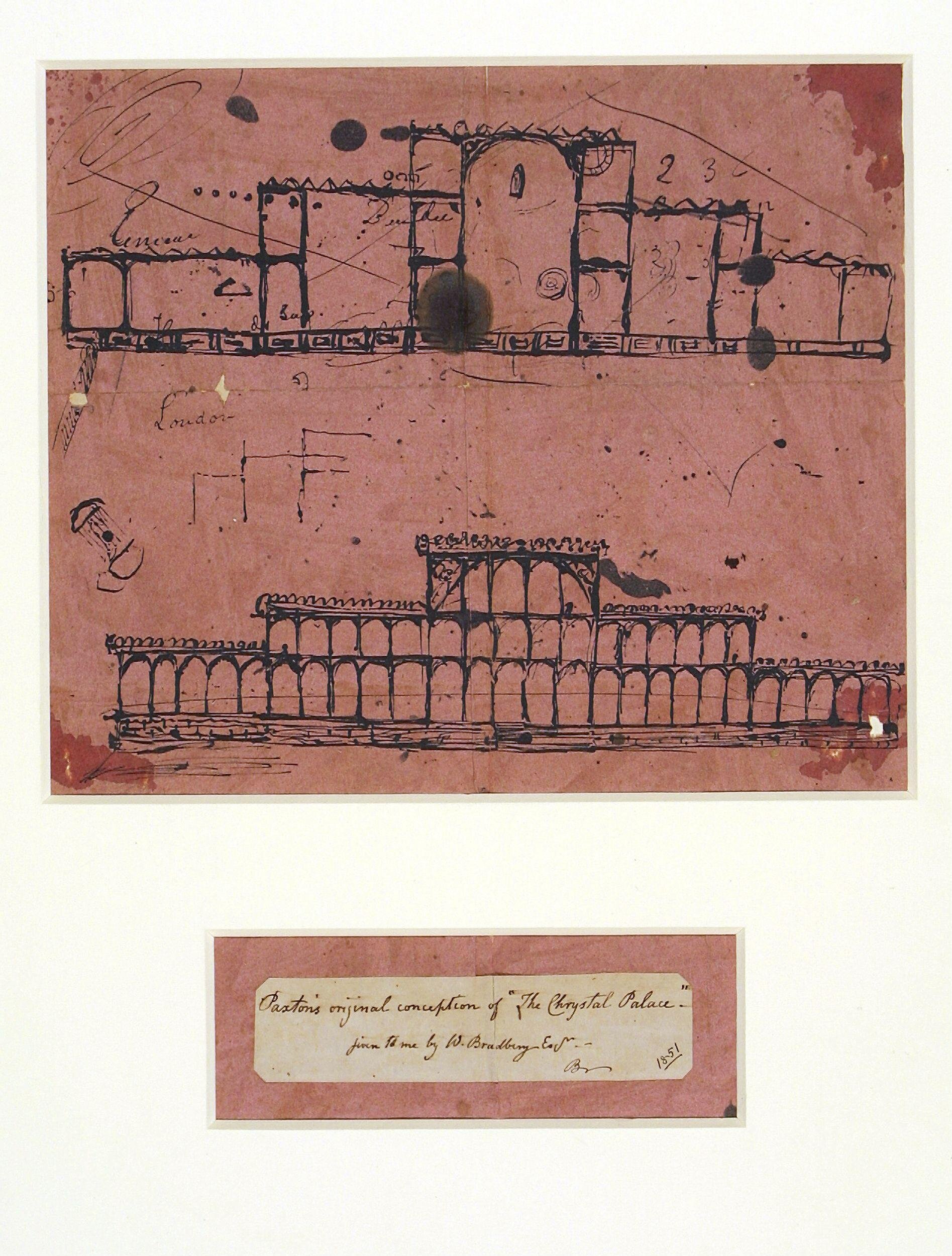
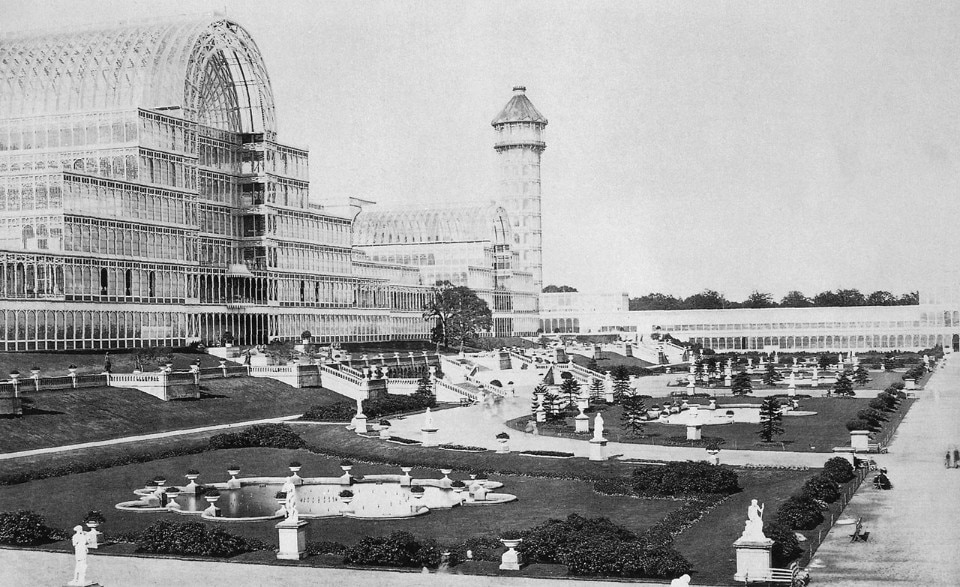
Paxton completed the Crystal palace plans and presented them to the Commission, but there was opposition from some members since another design was well into its planning stage. Paxton decided to by-pass the Commission and published the design in the Illustrated London News to universal acclaim. The designs use of glass stood out, fixing 108 panes in a day. The Palace was 563m long, 124m wide and 33m high. The Crystal Palace is a key building in the history of architecture, not only because of its monumental scale and the many technical innovations involved in its construction. It required 4,500 tons of iron, 5,600 m2 of timber and needed over 293,000 panes of glass. In its construction, Paxton was assisted by Charles Fox, also of Derby for the iron framework, and William Cubitt, Chairman of the Building Committee.
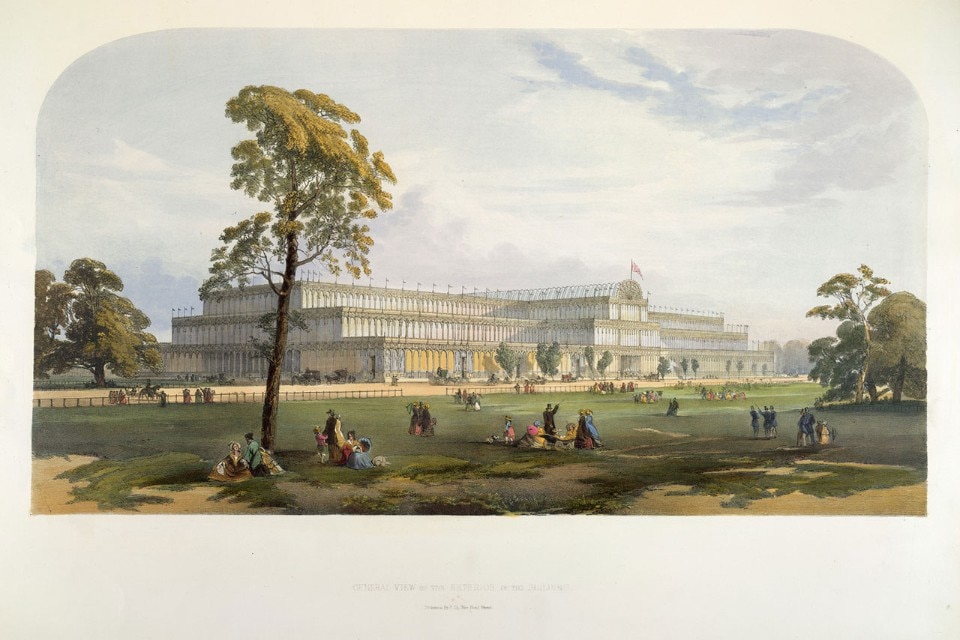
The Crystal Palace could be considered the first building to clearly unveil the characteristics of the new architecture.
For the participating countries, the Universal Expositions became an opportunity to show the technical achievements of their national industrial production, whose supremacy in those years was contended mainly between the United Kingdom and France. The innovations of mass production were also progressively integrated into the field of construction, thereby inaugurating a period of great urban renewal and the development of new building typologies. Until then, these construction techniques had been mainly applied to collective large-span buildings, whose environments sometimes required a hybrid condition between inside and outside. These included, for example, the first railway stations, covered markets and arcades. The Crystal Palace was precisely the manifesto for a country that was about to show its industrial power at the Great Exhibition.
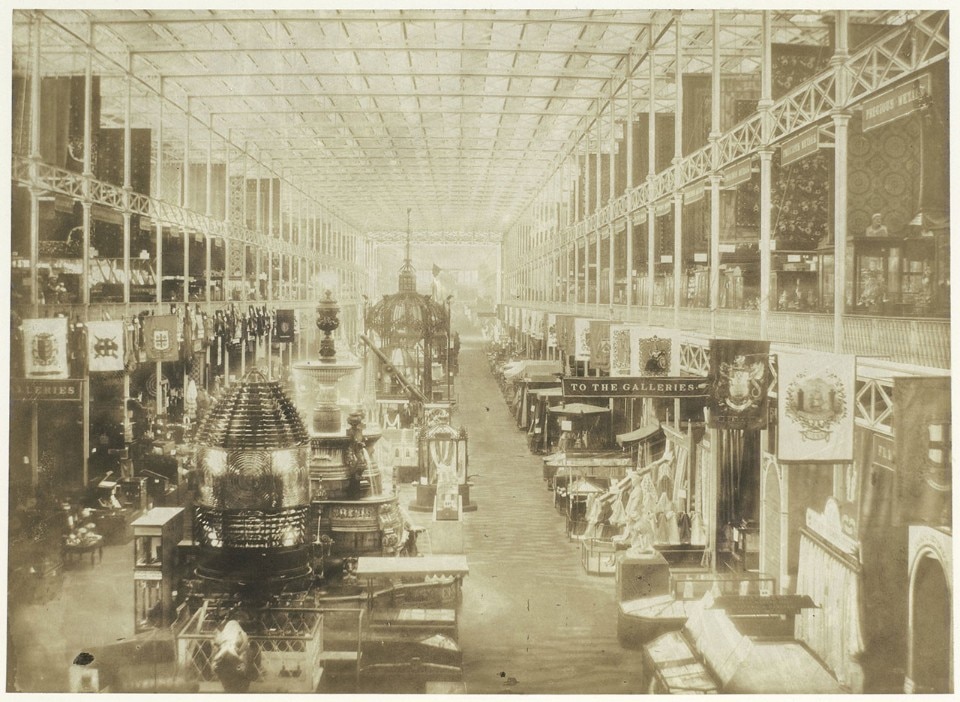
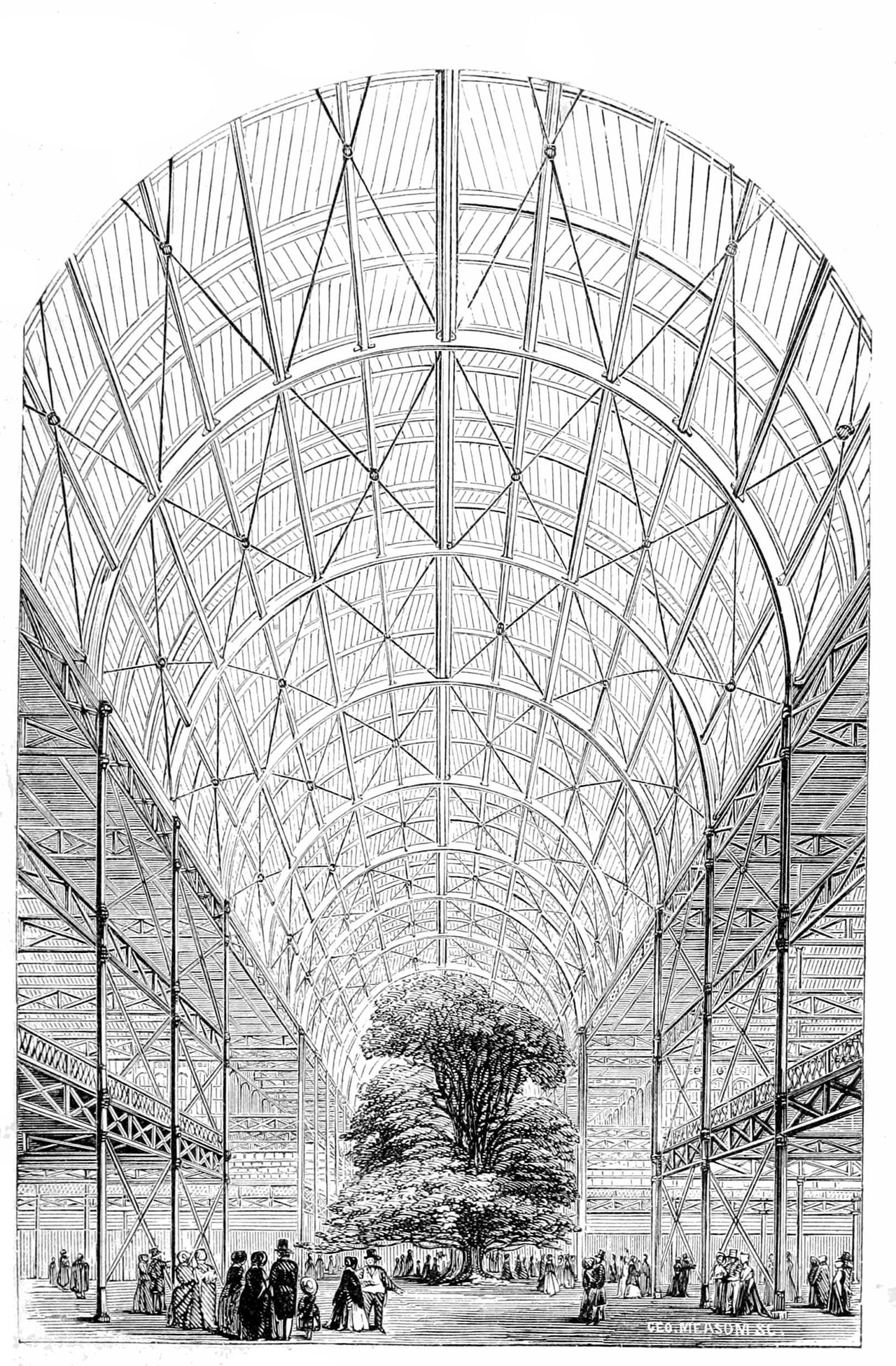
The Crystal Palace’s layout was inspired by the Roman, later Christian, basilicas: the main axis had five flat-roofed naves, crossed by a barrel-vault transept. The latter was later designed to protect the centuries-old trees of Hyde Park, an excuse for the conservatives to protest against the London Exposition.
The decoration and interior design were curated by Owen Jones an architect, designer. The more than 100,000 objects on display, coming from all over the world – from the first public toilet to the first bicycles, to the largest diamond in the world, inaugurating the great ritual of consumption.
The chronicle of the time tells that over 6 million visitors visited the structure during the event, which lasted from May 1 to October 15, 1851. Among them, some people was not positively impressed by the Palace.
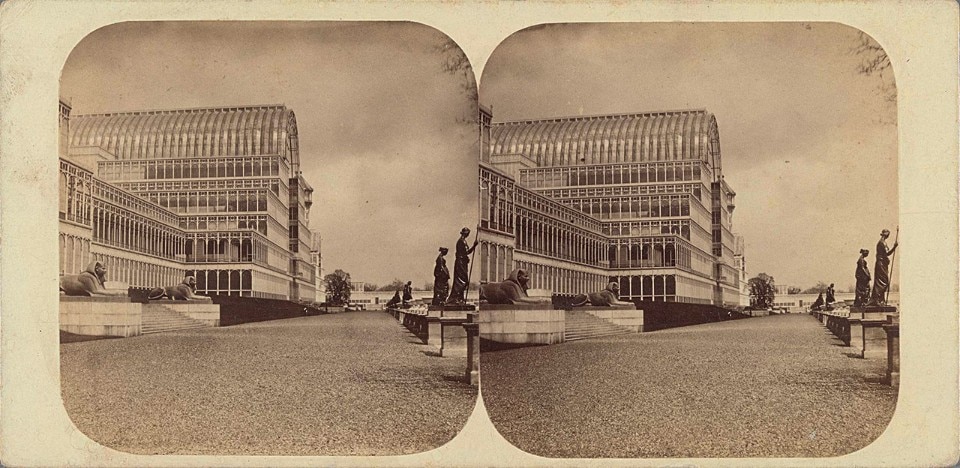
At the end of the Great Exhibition, Prince Albert decided to continue to pursue the objective of the Great Exhibition. In 1852 the Museum of Manufactures, then South Kensington Museum, directed by Henry Cole, was founded. Today it is a large institution known as the Victoria & Albert Museum.
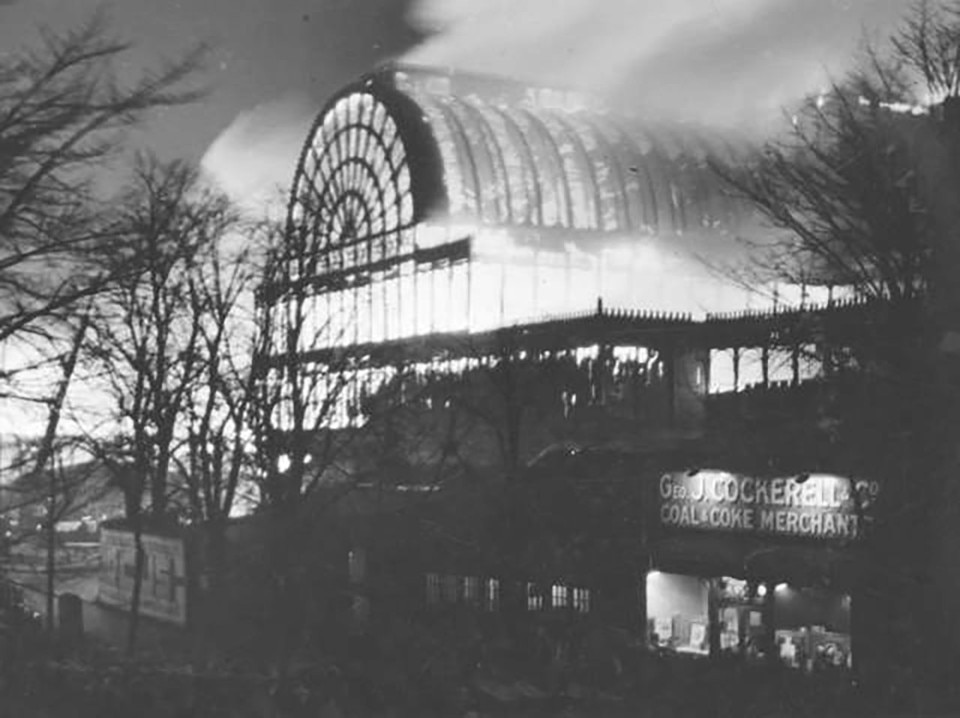
After the event, the Crystal Palace was dismantled and rebuilt in 1852 in South London, in Sydenham Hill. Over the years, several new purposes were attempted: in 1911 the Festival of Empire was held here, while from 1920 to 1924 it was the Imperial War Museum. Because of the high maintenance costs and its state of deterioration, the building was then entrusted to a special group, under the leadership of Sir Herny Buckland, before being ruinously destroyed by a fire on 30 November 1936.
The origin of the winter garden dates back to the 17th to 19th centuries where European nobility would construct large conservatories that would house tropical and subtropical plants and would act as an extension of their living space. Many of these would be attached to their main palaces. Earlier versions would be constructed of masonry with large windows and a glass roof, usually in the Classical or Gothic styles. While in the 19th century many of these conservatories were made out of iron and curvilinear glass. Winter gardens were not just restricted to private residence, many were built for the greater public. The first large public winter garden was built in 1842–46 in Regent’s Park, and was used for evening occasions, large flower shows and social gatherings. Other winter gardens, such as the Crystal Palace by Sir Joseph Paxton in 1851, were soon built and used for a variety of purposes.
Glasshouse
A greenhouse is a structure with walls and a roof made of transparent material, such as glass, in which plants requiring regulated climatic conditions are grown. A miniature greenhouse is known as a cold frame. The interior of a greenhouse exposed to sunlight becomes significantly warmer than the external temperature, protecting its contents in cold weather. Many commercial glass greenhouses or hothouses are high-tech production facilities for vegetables, flowers, or fruits. The glass greenhouses are filled with equipment including screening installations, heating, cooling, lighting, and may be controlled by a computer to optimize conditions for plant growth. Different techniques are then used to evaluate optimality degrees and comfort ratio of greenhouses, such as air temperature, relative humidity, and vapor-pressure deficit, in order to reduce production risk prior to the cultivation of a specific crop.
History
- The Roman emperor Tiberius ate a cucumber-like vegetable daily. The Roman gardeners used artificial methods of growing to have it available for his table every day of the year. Cucumbers were planted in wheeled carts which were put in the sun daily, then taken inside to keep them warm at night. The cucumbers were stored under frames or in cucumber houses glazed with either oiled cloth.
- The first mention of a greenhouse was in Sanga Yorok in 1450 compiled into a written piece about agriculture by a royal physician of the Joseon dynasty of Korea. It told detailed instructions on how to construct a greenhouse that is capable of cultivating vegetables, forcing flowers, and ripening fruit within an artificially heated environment. The Annals of the Joseon Dynasty confirm that greenhouse-like structures incorporating ondol were constructed to provide heat for mandarin orange trees during the winter of 1438.
- The concept of greenhouses also appeared in the Netherlands and then England in the 17th century. The first ‘stove’ heated greenhouse in the UK was completed at Chelsea Physic Garden by 1681. Today, the Netherlands has many of the largest greenhouses in the world.
- The greenhouse at the Palace of Versailles was an example of its size and elaborateness; it was more than 150 metres long, 13 metres wide, and 14 metres high.
- The French botanist Charles Lucien Bonaparte built the first practical modern greenhouse in Leiden, Holland, during the 1800s to grow medicinal tropical plants. The French called their first greenhouses orangeries since they were used to protect orange trees from freezing. As pineapples became popular, pineries, or pineapple pits, were built.
- The golden era of the greenhouse was in England during the Victorian era, where the largest glasshouses yet conceived were constructed, as the wealthy upper class and aspiring botanists competed to build the most elaborate buildings. A good example of this trend is the pioneering Kew Gardens. Joseph Paxton, who had experimented with glass and iron in the creation of large greenhouses as the head gardener at Chatsworth, in Derbyshire, working for the Duke of Devonshire, designed and built The Crystal Palace in London,
- 19th-century large Greenhouses built included the New York Crystal Palace, Munich’s Glaspalast and the Royal Greenhouses of Laeken (1874–1895) for King Leopold II of Belgium.
- In Japan, the first greenhouse was built in 1880 by Samuel Cocking, a British merchant who exported herbs.
- In the 20th century, the geodesic dome was added to the many types of greenhouses.
- Greenhouse structures adapted in the 1960s when wider sheets of polyethylene film became widely available. Constructed of aluminium extrusions, special galvanized steel tubing, or even just lengths of steel or PVC water pipe, construction costs were greatly reduced. This resulted in many more greenhouses being constructed on smaller farms and garden centres. Polyethylene film durability increased greatly when more effective UV-inhibitors were developed and added in the 1970s.
- Gutter-connected greenhouses became more prevalent in the 1980s and 1990s. These greenhouses have two or more bays connected by a common wall or row of support posts. Heating inputs were reduced as the ratio of floor area to exterior wall area was increased substantially. Gutter-connected greenhouses are commonly covered with structured polycarbonate materials or a double layer of polyethylene film with air blown between to provide increased heating efficiencies.
Technology: The warmer temperature in a greenhouse occurs because incident solar radiation passes through the transparent roof and walls and is absorbed by the floor, earth, and contents, which become warmer. As the structure is not open to the atmosphere, the warmed air cannot escape via convection, so the temperature inside the greenhouse rises. Ventilation is one of the most important components in a successful greenhouse, to regulate the temperature and humidity to the optimal level, and to ensure movement of air to prevent the build-up of plant pathogens that prefer still air conditions. Ventilation also supplies fresh air for photosynthesis and plant respiration and may enable important pollinators to access the greenhouse crop. Ventilation can be achieved via the use of vents and recirculation fans. Heating and electricity costly elements in the greenhouses, especially in colder climates. The amount of heat lost through the greenhouse covering as the coverings need to allow light to filter into the structure. Natural gas or electric furnaces are used to heat. solar energy can be used to boost the temperature during cooler periods. Waste heat from livestock can also be used to heat greenhouses, Some greenhouses also rely on geothermal heating. Opening the windows in the greenhouse when it gets too warm for the plants inside it. Electronic controllers are often used to monitor the temperature and adjust the furnace operation to the conditions. Some greenhouses are equipped with grow LED lights which are switched on at night to increase the amount of light the plants get, hereby increasing the yield with certain crops.
 Zaraspaces